


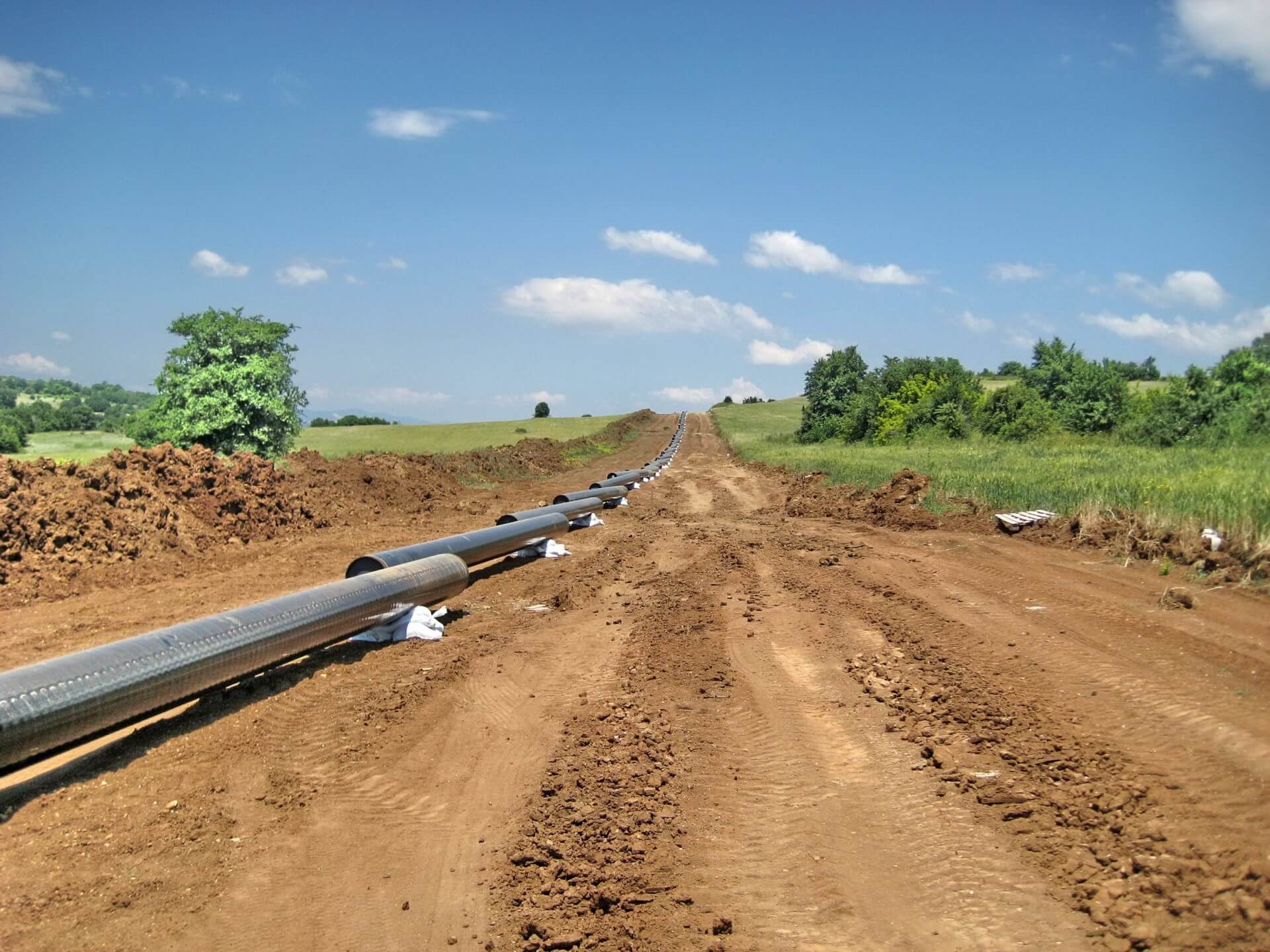
Gasification will have a positive impact from an economic, ecological, and energy perspective, but the real effects will only be felt once conditions are provided for an affordable connection, low transmission costs, competitiveness, subsidies or cheap loans for adapting internal installations and equipment, as well as for diversifying supply sources.
Reduced energy costs, both for households and companies, lower emissions of harmful gases into the air, and many other benefits could be realized by the citizens of North Macedonia if the gasification network in the country is expanded and if gas becomes accessible to households.
The benefits will be significant. Natural gas is the most environmentally friendly and cheapest energy source for use, both in households and in industry. Considering the level of ambient air pollution, the price of electricity, the cost of central heating, and the purchasing power of the average family in North Macedonia, rapid gasification is the only solution to these problems – says Bajram Redžepi, Executive Director of “National Energy Resources.
He adds that it is necessary to ensure conditions for an affordable connection, low transmission costs, competitiveness, subsidies or cheap loans for adapting internal installations and equipment, as well as for diversifying supply sources.
The rapid increase in gas consumption will also contribute to lowering prices. But to achieve this, a well-defined model for the development of distribution networks will be needed, taking into account the best European practices. If we provide conditions for low prices for the end consumer, interest will be high. I am convinced that this is possible if we consider the prices in the region – emphasized Redžepi.
Gasification in Skopje, as well as in other major cities across North Macedonia, will have a positive impact economically, environmentally, and energetically. Energy costs for households and the business community will be reduced, while new jobs will be created through the engagement of construction workers for infrastructure development. Additionally, there will be an increase in energy supply security, improved energy efficiency, reduced emissions of harmful substances, and greater environmental protection. Natural gas will replace previously used energy sources, which emit larger amounts of harmful substances, such as fuel oil, extra-light oil, and firewood used for heating.
According to global scientific studies, thermal power plants that use natural gas as fuel emit 50–60 percent less carbon dioxide compared to coal-fired power plants. Vehicles running on natural gas emit 15–20 percent less carbon dioxide compared to vehicles running on gasoline.
Natural gas provides an affordable energy source for the commercial sector to increase competitiveness, meaning lower production costs for the goods and services offered on the market, improving the conditions for quality delivery of public services, raising environmental standards, and providing funds for new investments from the savings, thus also contributing to local economic development – the Ministry of Economy says.
The Energy Law stipulates that natural gas distribution systems in the territory of North Macedonia may be constructed by legal entities based on a public-private partnership agreement awarded by the Government, or a concession agreement for public service also awarded by the Government, under which the concessionaire undertakes to build, operate, and manage a new natural gas distribution system.
Additionally, a natural gas distribution system may be constructed and managed by a public enterprise or another legal entity established by a local government unit. However, if an existing system in a certain area is not fully utilized, no new procedure will be initiated.
This legislative measure allows municipalities, if they have their own funds, to establish a public enterprise to carry out natural gas distribution activities, which was not possible under the previous law. Municipalities now have the opportunity to initiate procedures for the construction of new natural gas distribution systems through public-private partnerships, with the process being conducted by the Government – explain the Ministry.
Potential users of natural gas include households, i.e., individual houses, apartments, and residential buildings, as well as the commercial and service sectors and industrial facilities. The 2015 feasibility study predicts a significant reduction in heating costs for citizens if gasification is implemented.
– For every investor, the first priority in building gas distribution networks is industrial consumers, considering their distance from the planned section and their consumption, because the investment in constructing the distribution network is substantial. For the construction of secondary gasification networks, we believe it is necessary to encourage citizen interest through campaigns, informational meetings, and surveys, since the use of natural gas is the choice of the citizens. If they have an economic interest, taking into account the other benefits of using natural gas, it is expected that they will choose natural gas – the Ministry of Economy says.