




Redzepi: By 2025, most cities and municipalities will be connected to the gas network
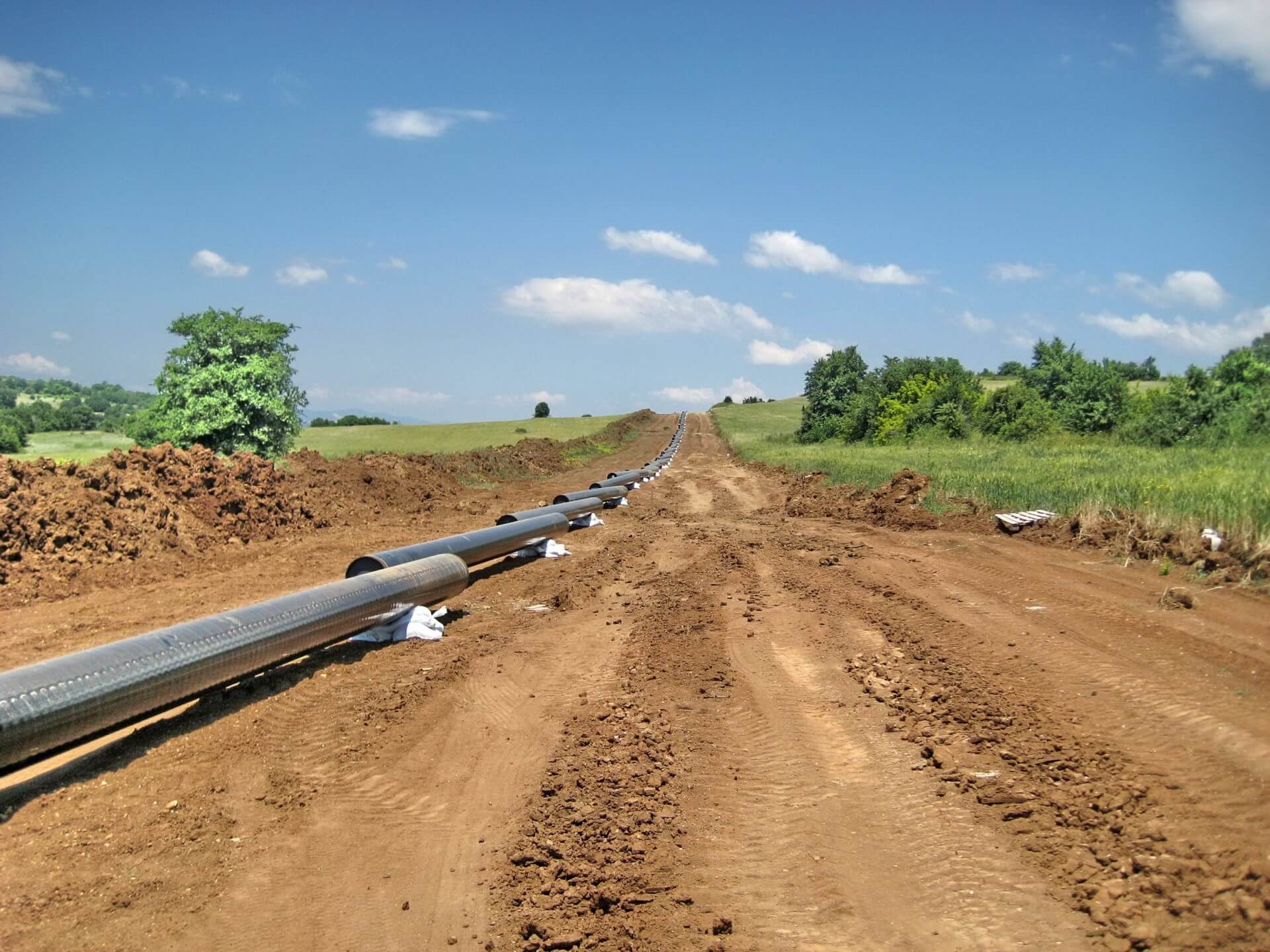
The Government announces intensified construction activities for the gas pipeline in 2019 and 1 billion 557 million denars have been allocated for this purpose in the budget. The Director of National Energy Resources (NER), Bajram Redzepi, says in an interview for ‘Meta’ that their transmission system will become operational very soon. The Metering and regulating station (MRS) Stip will be able to operate during the second quarter of 2019. The MRS Negotino will become operational during the third quarter of next year, when the connection of the industrial zones (TID zones) in Stip is also planned. All other stations in the Pelagonia and Polog regions will be operational by mid-2020.
The Government has charged the Ministry of Economy to form a working group that will determine the most efficient model for developing natural gas distribution systems in Macedonia. What is the significance of establishing these distribution centers for accelerating the gasification process?
- The gasification project is a priority in the work of this Government. This working group will need to propose to the Government a model for the development of the natural gas distribution network in the country, with clearly defined goals and expectations. In other words, it should ensure access for every end user throughout the entire territory of the country and enable fast and efficient gasification, especially in regions where air pollution levels are alarming. To achieve these goals, we will need to provide an affordable connection for every household and every end user, a low price per cubic meter of gas and assist households in adapting their internal installations through subsidies or low-interest loan.
How many distribution centers of this kind are needed — one for each municipality? Would they operate at a regional level?
The current Energy law allows a liberal market for natural gas distribution operators. According to the feasibility study, the total investment is estimated at around 250 million euros. Considering the financial capacity of our municipalities, the available professional staff, and the fact that each municipality would have to build its own dispatch center, SCADA monitoring system, billing system, maintenance and many other fixed costs, I am personally absolutely convinced that this would not work and that the expected goals would not be achieved. Looking at the best European practices and the reasons why the 2013 call for establishing a public–private partnership was unsuccessful (when three concession areas were designated: Eastern, Western, and Skopje regions), I believe that a public–private partnership with a serious private partner should be established. This partner should have extensive experience and strong financial capacity, and should be obligated to develop the network throughout the entire territory of the country and to ensure an affordable connection for every interested end user within 3–4 years, both in the most polluted regions and in all other cities in the country. At the same time, without undermining the liberal market, any other operator that wishes to build and operate a distribution network in certain regions or cities should be allowed to do so in accordance with the law.
The construction of the Skopje–Gostivar branch is important for the interconnection pipeline with Greece and you have already applied for a grant for it together with Greece, i.e., the Greek operator. What will be the benefits for the country and what does this pipeline specifically mean for us?
– The construction of the interconnection pipeline with Greece is our top priority, due to the diversification and competitiveness of our natural gas supply sources; this falls under our competence. To clarify, under the new Energy law and the obligation to unbundle activities, the operation of distribution networks is not within our responsibility. However, it is very important for us to ensure that after investing significant funds, there will be users for our services and infrastructure for natural gas transmission. I am optimistic that by the end of next year we will complete the design of the interconnection pipeline, the necessary studies, etc., and obtain approval for construction. Of course, the financial structure will be finalized so that a call can be announced to engage operators for construction, and it is realistic to expect that this interconnector will be operational by the end of 2022.
Regarding the Skopje–Gostivar route, you announced that it should be completed by the end of next year or the beginning of 2020, because a large number of changes have arisen during construction. What specific changes are you referring to?
-It is true that on this lot there was a need for several necessary changes to the route, of various kinds. One of them is the modification at Vodno, due to requests from civic associations. As for the other, after the route was defined and construction on the ground began, several municipalities adopted detailed urban plans, issued building permits, legalizations, and concessions along the route, etc.
When can we expect concrete results from all these gasification activities that you announced would be completed next year and by mid-2020? In other words, when will households and companies be connected to natural gas?
Our transmission system will become operational soon. The MRS (metering and regulating station) Stip will be able to operate during the second quarter of 2019. The MRS Negotino will be operational during the third quarter of 2019. We plan to connect the TID zones Stip during that period. All other stations in the Pelagonia and Polog regions will be operational by mid-2020. It is very important to have reliable distribution operators so that by then they complete the design and obtain construction permits, allowing them to start construction activities. I am optimistic that during 2020, construction will begin in most cities and municipalities, and by 2025 they will be fully covered. Besides the significant economic benefits, the problem of air pollution will also be completely addressed.
The connection fee for gas in the Municipality of Kumanovo was 800 euros, but with subsidies from the municipality, the fee per household has been reduced to 650 euros. This is still expensive for an average family. How will you make gas easily accessible to citizens?
-The transmission tariff for distribution operators is determined by the Regulatory Commission, while the connection fee will depend on market conditions. For comparison, the average connection fee in the countries of the region is ten times lower than in Strumica and Kumanovo. According to the methodology for calculating this fee, an increase in the quantities supplied or the number of users will significantly reduce the price.
Funds for expropriation are allocated in the budget. Does this mean that all issues of this kind have been resolved, and what would be the main obstacles that could cause the deadlines to be missed?
-A major mistake was made in 2017, when no funds were allocated for expropriation. That is why in 2018 we had and in 2019 we also have, funds earmarked for this purpose. I encountered a situation with not a single resolved expropriation case, while we have several thousand such cases. I am satisfied with the progress made over the past six to seven months. In Lot 2 (Negotino–Bitola), over 80 percent of expropriation has been completed and I expect it to be fully resolved soon. In Lot 5 (Skopje–Gostivar), due to the larger number of cases, the changes and delays in several other institutions, the pace of resolution has been slower. Most of the obstacles have already been overcome, and I expect that in this lot as well, we will complete all expropriations soon.
According to the activists for the protection of Vodno, work there is being carried out without a final approval for the changes during construction, because the newly designed route has not yet been approved. Which route are you working on, the new one or the old one?
- We have repeated this several times. There is a construction permit for the entire project. The Vodno modification concerns kilometers 20 to 24. We are not working there until we have a new permit for that modification, which will be obtained soon. At Vodno, we opened the route from kilometers 24 to 27 and the plan was also to open from kilometers 17 to 19. However, to get the construction machinery to kilometer 19 on the ground, there was a need to level several spots. The machines moved along the new route, where we are waiting for approval, not along the old route, where we have a permit based on the original project. This was planned for very practical reasons, so that we would not need to level the old route, which will not be used. This was the source of the misunderstanding with the activists, which I consider irrational, but we decided to wait for the approval for the modification. I would like to emphasize again that Vodno will not only lose nothing from this project but will actually gain significant benefits.
Who monitors the work, is there supervision over the work at Vodno?
Of course there is. Supervision is present throughout the entire construction process and at every construction site.